
Why Kennedy’s Food Pyramid Is Wrong
I Read the USDA’s 90 page Scientific Report and 418 page Appendices So You Don’t Have To
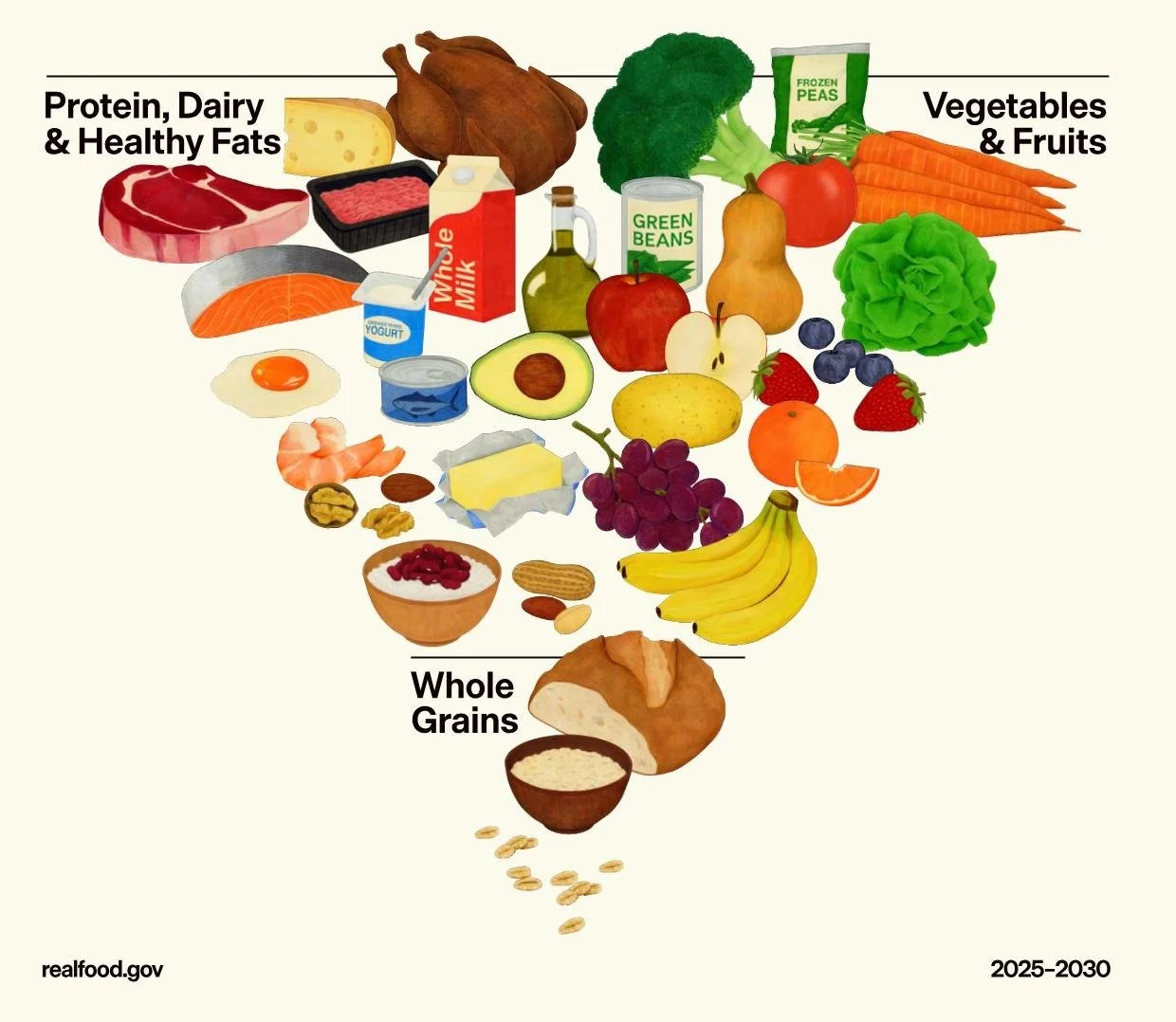
Hello 2026! Nothing says “New Year” quite like more chaos. Today, the USDA unveiled their updated nutrition guidelines for 2025-2030, and like most of the internet, I’m sure you have questions. As you can see from the image above, the dreaded food pyramid from the 90’s is back, baby! But this time, it is inverted, and in my opinion, should be interpreted as a reflection of the extreme distress plaguing us in this new world where everything is upside down. Think this seems like a South Park episode? That’s because South Park literally had an episode about this in 2014! In Season 18 Episode 2, Cartman has a dream that the food pyramid should be upside down and called the USDA to flip it. No original ideas, ever!

As you can see from a cursory glance, it appears this administration is recommending equal amount of vegetables, meat, and dairy, with a limited amount of whole grains. This graphic has me wondering many things… like, why is ground beef at the top? I think for many, who just view this graphic and do not read the rest of the 10 page guideline overview document, it appears that you can eat as much beef and dairy as you want. However, when you read the written recommendations, they mostly follow the former MyPlate recommendations with two major changes in protein and alcohol consumption. I find this concerning as almost 1 in 5 American adults are functionally illiterate, and a diet of mostly meat and dairy will eventually result in disease. The government’s food guidelines should be based on the evidence surrounding longevity and reduced chronic disease risk. As the leading cause of death in America is heart disease, I don’t see how an increase in meat and dairy will fix this. However, the inverted pyramid graphic is extremely misleading, as the written recommendations significantly differ from the visual.
Overall, the written recommendations support 3 servings of dairy, 3 servings of vegetables, 2 servings of fruit, and 2-4 servings of whole grains daily, which is similar to the previous MyPlate guidelines that were in effect from 2011-2025. Note that the whole grains recommendation of 2-4 servings mirrors the same amount of recommended dairy servings; so, I’m not sure why whole grains are at the bottom of the pyramid, while dairy is at the top. That is extremely misleading. It is also a disservice to the public to not explicitly clarify the difference between whole grains like quinoa and processed grains like Wonder Bread. I fear the general public may consider this graphic denouncing all grains as unhealthy and further restrict them in their diets, which is troubling as 3 servings of whole grains daily reduces the risk of developing dementia and Alzheimer’s. The most significant change in the guidelines is the recommended amount of protein, previously at 0.8 grams of protein per kilogram of body weight, now up to 1.2-1.6 grams. Firstly, why do they think Americans know how to convert kilograms into pounds in their head? Secondly, most people do not need this much protein unless they are athletes or healing a critical wound. The Scientific Report quotes that “most U.S. adults consume on average 1 g/kg/day”, however most of our population is overweight. While adequate amounts of protein is extremely important, is it appropriate to recommend to a population-at-large facing obesity increasing protein at the expense of vegetable intake? With this newfound focus on protein, I anticipate food manufacturers will start labeling foods as “high protein”, adding unnecessary protein powders to processed and packaged products. Just as we learned living through the epidemic of “low fat” and “no sugar” foods, a “high protein” label will not mean a food is healthy. Lastly, the new guidelines have kept the recommendation of consuming only 10% of calories from saturated fat, however, that seems impossible to stay below if beef and dairy are at the top of the inverted pyramid. For example, if you use butter to cook and consume 3 tbsp worth daily, you already met your 10% saturated fats limit on a 2,000 calorie diet. It doesn’t seem likely that you are eating steaks and drinking milk all day in addition to this, unless you are eating more than 2,000 calories a day. This makes zero sense from a meal planning perspective. Furthermore, the guidelines state, “More high-quality research is needed to determine which types of dietary fats best support long-term health”, but we know what fats are best, extra virgin olive oil.
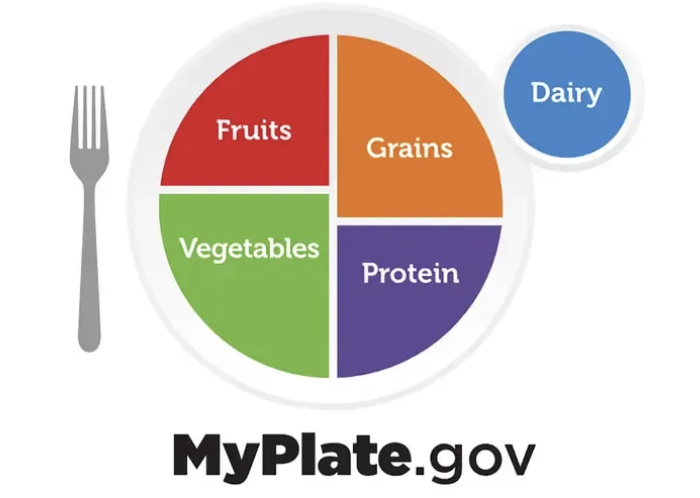
In the Scientific Report, the language used repeatedly bashes previous administrations’ dietary guidelines, specifically the food pyramid instituted in 1992. Yet the original food pyramid was replaced by MyPlate, so I’m not sure why this administration is “waging war” against guidelines set over 30 years ago, which have long been changed. On their new website (Realfood.gov), they ignore the past decade of MyPlate guidelines and transition from the old food pyramid to their new inverted one. There are hardly any mentions to MyPlate at all, as if it didn’t exist. So, if the idea is to overhaul MyPlate, why ignore it completely? While MyPlate was not ideal, especially with its recommended serving of dairy, it was a graphic that was easily understood visually by the general public and accurately represented the written recommendations. Furthermore, it is strange that official government guidelines have several pages disparaging the previous recommendations from former administrations, as if Trump himself was not in office in December of 2020 when the 2020-2025 guidelines re-issued MyPlate.
The opening message of the guidelines is that this is a dramatic reset of the federal nutrition policy that will support American farmers and ranchers. Keyword: ranchers — as if previous food guidelines strayed from supporting the interests of America’s largest food lobbies. On the panel of nine Scientific Report authors there is only one Registered Dietician and no Certified Nutrition Specialists. I guess the lack of credentialed nutrition professionals is not surprising, considering nowhere in these documents does it mention the role Dietitians and Nutritionists play in reversing chronic disease through Medical Nutrition Therapy. When you browse through their disclosures of financial relationships, you’ll see names like National Dairy Council, Global Dairy Platform, American Dairy Science Association, Danone, General Mills, Washington Grain Commission, National Cattlemen’s Beef Association/Texas Beef Council, and the National Pork Board. One of the nine is a cofounder of Virta Health, a virtual health company that targets patients with Type 2 Diabetes and markets GLP-1 drugs. In understanding the financial interests at play, it should be no surprise that meat and dairy top the recommendations instead of evidence-based recommendations like vegetables. Worldwide, scientists recommend increasing consumption of plant foods like vegetables. Moreover, chronically low fiber levels are leading to an increase in bowel cancer, especially in younger people. These guidelines issue concerns about the exploding obesity epidemic and chronic illness rates, yet keeps the recommended serving of vegetables at a mere 3 per day. The Scientific Report does stress the importance of randomized controlled trials over observational studies, yet cherry-picks the evidence supporting ketogenic diets. Although ketogenic diets are highly recommended to treat illnesses such as epilepsy, they are not appropriate long term for most people. While I understand that high protein diets are attractive as they can offer immediate results in terms of weight loss and muscle building, long term adherence strains the kidneys and deprives the body of the needed phytochemicals and antioxidants, found in fruits and vegetables, which reduce oxidative stress and inflammation, the root cause of disease. Many famous proponents of these diets, like Dr. Robert Atkins, suffered from obesity, high cholesterol, and cardiovascular disease at the end of their life.
Likewise, the guidelines completely ignore the evidence on alcohol’s role as a carcinogen. This year, the administration was supposed to further reduce the recommendations for daily alcohol consumption down to zero, mirroring other nations like Canada, from previous moderate recommendations at 1 serving per day for women and 2 servings per day for men. However, this administration completely removed the recommendation entirely in place of a simple “limited”. That’s it, just “limited”. If the previous moderate recommendations were not successful in curbing alcohol consumption, how can removing drink limits altogether improve behavior? Alcohol is a known carcinogen, and the body treats it like a poison. Period. Even moderate amounts of alcohol consumption leads to impaired liver function, which could result in fatty liver disease and cirrhosis. It seems clear to anyone with eyes that this administration is just as gleeful as past ones in accepting bribes from the meat, dairy, and alcohol lobbies, at the expense of keeping Americans sick.
The main argument of the changes is a promotion of “Real Food”, meaning whole foods, which as a nutrition professional I obviously completely agree with. I’m assuming they went with the term “Real Food” because if they used “Whole Food” Amazon would sue them. However, this does not address the social determinants of health many Americans are facing that are preventing them from eating healthy. Many people want to feed their family fruits and vegetables but cannot afford them, as a meal at McDonalds is cheaper. Proponents of the new guidelines will argue that the recommendations favor steak and chicken and not fast food, but have you seen the current cost of cuts of meat in the grocery store? Without improving health equity, lowering the costs of fruits and vegetables through government subsidies, and reducing food deserts, the overall health of our population will continue to deteriorate. However, as this administration halted the almost 30 year old USDA Household Food Security Report this past September, we will unlikely know the true number of our neighbors facing hunger. Although most Americans completely ignore these food guidelines, as seen by our 70% overweight/obese metrics, these guidelines also influence WIC, Head Start, and the National School Lunch Program, which are supposed to abide by these recommendations. It will be interesting to see how funding shifts for these programs to meet the increased economic costs of the added protein requirements. Kidding, we know that won’t happen.
And that’s my largest issue with these guidelines, it’s all theatre. As a former theatre major, I should know, right? Most of our government’s focus on nutrition education was a result of WWII, when the drafting of soldiers elucidated malnourishment in large sections of the country. In the 1940s, the medical profession we now refer to as dietetics began to bloom as a result. Throughout the end of the 20th Century, America’s largest industries have funded research with favorable outcomes for their products and poured billions into lobbying so our politicians form policy benefitting their profits. This is why figuring out how to eat healthy is so difficult. Limiting nutrition research to the whims of industrial titans created a billion dollar vortex ripe for influencers. Many of these diet gurus are even paid by these same companies to promote their foods. However, over the past couple of decades, the field of nutrition research has changed dramatically. High quality evidenced-based nutrition is clear in that eating a diet of a variety of whole foods, with the most amount of servings of fruits and vegetables, leads to improved health outcomes and increased longevity. This message is repeated from scientists across universities worldwide. If you are confused on how much of each food group you should be eating, I highly recommend Harvard’s Healthy Eating Plate (although I’d recommend olive oil over all other suggested oils) or Dr. Weil’s Anti-Inflammatory Food Pyramid. It is also important to note that the people who live the longest in Blue Zones consume at least 1 serving of legumes (beans, peas, lentils) per day. When seeking advice, you should receive counsel from credentialed nutrition professionals (RDs, CNSs, NBC-HWCs) or organizations such as the American College of Lifestyle Medicine, who will tell you that diets high in a variety of different colored vegetables and low in red meat, like the Mediterranean Diet, is the gold standard for health.